Showing posts with label Hearing Impairment and the society. Show all posts

Sunday, May 13, 2012

Is your hearing-aid suiting you???

Hearing aid industry has developed different types of hearing aids, some people need to personally control their hearing aids while someexperienced wearers,  still need either a volume control, multiple memory switch (quiet versus noisy situation switch) or a remote control in order to control volume or to access different hearing aid programs for handling different listening environments. Some people need control of their hearing aid for the following reasons: the automatic programmable feature does not meet their needs in 100% of listening situations; psychologically the hearing aid wearer simply must have control of their hearing aids; or they are long-term hearing aid wearers who are used to a volume control and are therefore unwilling to part with it through habit. (Usually happens with those who have used analog aids for long and are now suddenly fitted with digital programmable ones!!
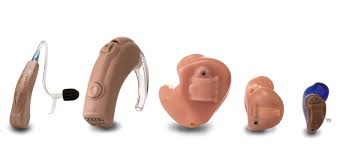

Types of hearing -aids.
open fit,  BTE,              ITE              ITC         CIC
It is very important that the user determine his needs with respect to controlling the hearing aid. You don't want to fiddle with your hearing aids every ten minutes but then again you don't want to be frustrated because your hearing aids work well in most situations but not in 10% of your favorite situations (e.g. listening to soft music).

Sound Quality
One of the most important aspects of an enjoyable hearing aid experience is that you like the sound quality of hearing aids. So during hearing-aid trial, make sure that you consider the following 

•Do you like the sound of your voice?


•Is the sound clean and crisp (sound clarity)?


•Is the sound too tiny?


•Does your hearing aid seem to plug up your ear and in fact muffle sound?


•Does it make some pleasant soft sound audible to you?


•Are loud sounds uncomfortable to you?


•Are your hearing aids natural-sounding?


•Does music sound pleasant and rich in texture?


•Does the world sound like you are in a barrel?


•Does your hearing aid whistle, buzz or squeal on its own?
do you have trouble listening in niose?


With today's modern digital hearing aids, most of these problems should be solved. If you notice any of these problems during the trial and in your follow-up visits, by all means talk to your audiologist about these issues. Such professionals are capable of adjusting your hearing aids to your satisfaction. The extent to which all of the possible sound quality issues can be resolved is of course, dependent on the severity of your hearing loss. In other words, some types hearing losses (even some features like, if the audiogram is slopingor steeply aloping or reverse sloping etc) are simply more conducive to restoration of rich sound quality in many listening environments while others are not.

Cosmetic appeal???
 A lot many people these days request for invisible aids!! (read Completely in the Canal ). One must know that CICs do not suit everyone. Most of the times the request for CIC is always cosmetically linked.
Its imperative that one should discuss the candidacy with ur audiologist. As far as cosmetics go even Behind The Ear (BTE) are available in various sizes and provide a better range of options for the fitting as well as budgets!!

Realistic expectations....
Be realistic. At times during Trail  a relative accompanying the patient speaks to the client in a muffled voice in noisy background and expects the client to "hear normally". Many a times i ve to repeat the experiment on that 'normal hearing individual' to prove that even he cant hear it!!!!
Remember that it takes time to get used to hearing aids, especially if you're a new wearer. Keep in mind that background noise is almost always part of your environment, and adjustment to it is required. In time, you will tune out many of these everyday sounds. It's important not to become disappointed or frustrated while your brain begins to adjust to a whole new world of sound. If you're an experienced wearer trying new hearing aids, understand that they might not sound like your old ones. Before you reject them, allow your ears and the auditory system to adapt to these new sounds. Youing aids  just might find that you like this new sound better than the old one. Keep in touch with your audiologist to get ur queries answered.

Regular follow-up.
This is important if ur hearing aids have to last long (usually 5yrs is optimum). This also helps in fine tunning the hearing aid based on ur requirements if its a digitally programmable one.


Tuesday, April 24, 2012

Hearing aids for Senior citizens.... Need for a reality check!


 Usually senior citizens sufferring from hearing loss have a common complaint. " I can hear u but cant make out what ur saying", " dont increase the volume (speaker or TV) ... my ears ache" "I cannot tolerate loud sounds.... "

 Some who have been using hearing aids complain, " its a waste of money. i cant make out anything..", " the noise is irritating and i get a headache". Very often these hearing aids are discarded. Of all my senior citizen clientele that were aided before about 90% of them had rejected their hearing aids.
What goes wrong?
  • The first fault lies in testing itself. Many people go for 'fitting' hearing aids (usually to distributors) without doing a hearing test or an audiogram. How on earth can the fitting be done?
  • It is very important that a complete audiometry which includes an audiogram and speech audiometry be performed on the client. Also the tolerance levels can be checked. Speech discrimination scores are particularly needed if the person has "clarity" issues.
  • Many people do not use ear moulds (when needed).
  • Due to financial reasons amny senior citizens compromise on the quality of hearing aids. For instance, a programmable hearing-aid will give better clarity than non-programmable ones but they do come at a cost. These days there are good programmabble aids which are reasonable. One must ask the audiologist for the same.
  • A very important factor is "realistic expectations" from hearing aids. The end user should be told about what is to be expected after the fitting.

A point to draw home: Senior citizens with hearing loss usually suffer from nerve deafness which makes it imperative that their hearing aid fitting be accurate considering different factors and more importantly the outcome expectation should be 'realistic'....

Thursday, April 12, 2012

Hearing aid batteries:


Zinc-air button batteries use highly caustic potassium hydroxide as the electrolyte, which causes severe burns when exposed to delicate tissue, as the batteries have vent holes in them to extract oxygen from the atmosphere to use as part of... the battery chemistry.
In fact, the 24/7 National Button Battery Hotline (202-625-3333) was established over 20 years ago by the industry specifically for cases like these. It's also the reason why hearing aids have tamper-proof battery compartments, to keep kiddies out.

This information was shared by a good friend and a fellow audiologist.
Whenever we as audiologists instruct ppl about batteries we forget these little important things.

Three important points to drive home:
  1. Keep hearing aids out of reach of children and pets!
  2. Do not keep hearing aids very cose to or on any electronic item.
  3. Do not leave batteries loose...... If its done with then discard it.

Wednesday, April 4, 2012

Noise hazards......

(also read earlier blog: Noise...... Beware!)

Noise Induced Deafness........ partial though!!


   I wonder if its a co-incidence, but For teh last 3 weeks continuously, i have seen clients reporting with the complaint of unable to hear soft sounds.... especially amidst murmurs (like in offices). Typically follwing were the complaints:
  • Unable to 'make out' what the speaker just said... though i heard it.
  • Unable to follow speech while i drive.
  • unable to follow speech when there is background noise (even though its not loud)
  • Unable to follow speech if i dont lip read..... especially if its a woman talking!!
  • difficult to follow conversation in board meetings.
All these guys were holding very good positions in their fields but the hearing problem was interfering in their lives. The audiogram was something like the following:
 It is to be observed that the hearing thresholds are normal till about 1000Hz but then on the thresholds dip mainly at 4000Hz. (Normal thresholds are upto 25 dB across all frequencies.

Indepth analysis of their heariing habits revealed, ALL OF THEM SPENT MOST OF THEIR WAKING HOURS ON THEIR CELL PHONES FOR THE LAST FEW YEARS.... MAINLY IN THE LAST 2 YRS!!

Phew..... 400-500 calls a day, occasionally on handsfree listening to music..

Not just these individuals but, i see so many young adults glued to their cell phones all the time....... either chattingor listening to music. At times the music played is so loud that even the neighbouring guy hears it!!

When this happens habitually, medically we are damaging our ears. The area which is damaged first is sensitive to high frequency hearing...... so that accounts for the typical audiogram seen above. If not curtailed, then eventually all the frequencies shall dip and the hearing loss will progress.


Point to drive home: The next time you feel tempted to use that handsfree or have long chats over
the mobile phone....... u know what to do!!

Sunday, March 25, 2012

Hearing aids........ needed or not?


Sharing with u readers about a client i saw very recently.  This lady had a lot of other issues besides her hearing loss. However a non-audiologist tried to fit her with an aid on the behest of an ENT (guys.... nothing personal here).  When they came to me for a second opinion, i found that she demonstrated classic symptoms of a medical condition and her 'fluctuating' hearing loss was just the tip of the ice-berg. I halted her hearing aid fitting, did a complete audiological evaluation and immediately reffered her to an ENT for complete evaluation.
Point to draw home: All hearing losses dont or cant be fitted with a hearing aid. There is a lot more to it than what meets the eye. One should always take things with a pinch of salt. Consult and audiologist for  complete testing before u decide on fitting urself with an hearing -aid!

8/04/2012
Just for an updtae here, She is confirmed with the medical diagnosis and is progressing well with treatment. I shudder to think of the damage that cud ve been caused to her ears had she been fitted with hearing aids!


We need to WATCH OUT!!

Monday, March 19, 2012

hearing education....

CONSUMER EDUCATION..... A MUST!

This is one of my experiences i want to share. Parents of children with hearing impairment are often at a loss when it comes to "what is best" for thier children. I saw a child with Moderate - moderately severe hearing loss (now 4 yrs old), diagnosed at a very good age i.e. 2yrs. HOwever parents were made to run from pillar to post over the hearing aid fitting and speech-language therapy.
An important reason for putting up this case here is, this child suffered from Middle ear infections. It is very very important to note that, the middle ear infections are often treatable and the hearing loss resulting from them are reversible. However very often the hearing loss is fluctuating and the child gives inconsistant responses. The parents and also the professionals involved should judge this.

A point to take home: Unless the child with hearing impairment also has Auditory Processing Disorder, it is highly unlikely that he will not develop adequate speech-language!!

Saturday, February 9, 2008

Unilateral hearing loss and partial deafness...

hello readers... am back after a long hiatus. Back to discuss yet another important topic plaguing not just adults but a large number of school children too.

Unilateral hearing loss:
this means that hearing loss effects only one ear. Usually results from trauma to the ear and /or infections. Do remember unless Normal life is effected, usually hearing aids are not prescribed. If they are (as in case of assymetrical hearing loss) then the better ear is fitted with the hearing aid. It is very important to note that the naturally better ear will always respond first, irrespective of hearing aids!

Partial deafness:
Many a times it is seen that a child doesnt do well academically and needs instructions to be repeated many a times. besides suspecting learning disability (LD), currently made famous by Aamir Khan's "TZP", hearing also should be assessed. This especially if the speech is unclear. Hearing Aid fitting followed by spech-language therapy will help the child.
in case of adults, the symptoms typically include, "can hear sounds but cant make out....." Raising volumes too doesnt help much. Usually observed in case of high frequency hearing loss. Hearing aids in these cases have to be fitted with extreme precision.


So the next time we come across a child who otherwise seems normal but has unclear speech and poor in academics........ we know what has to be done!

i look forward for your opinions and comments.
P

Monday, December 10, 2007

"NOISE"........... beware!

TOO LOUD????Our ears evolved over the millennia in the backdrop ofsilence. In ancient times, our life was marked by thesound of wind, of water, temple bells, of the cries ofwild animals and, most importantly, laughter.Come 20th Century, all this changed. Industry,automobiles, aircraft, jackhammers arrived. Also,engineering equipment began tearing up the ground tobuild tall buildings and skyscrapers — there was bignoise all around.Today, we are marooned with a medley of noise that ourears were never designed for.Honking, music systems, personal stereos, and iPods…the list is endless. They have only added to blazingcacophony.Too much noise is damaging to us. The irony is — wedon't notice until it's too late to do anything aboutit.

ORIGIN OF SOUND AS LANGAUGE OS SPEECH: the infant hears his first sounds outside the womb, the moment it is born. A normal hearing infant is exposed to all kinds of sounds, i.e. Speech-language of his environment, sounds of toys, birds chirping…. The list is endless. This according to the Chomskian theory of Language development helps him to develop adequate speech and Language skills.
Following are the typical milestones regarding the child’s’ speech and hearing development:

Birth – 2 months → startling response to loud sounds
2months – 6months → eye movements to sounds
6months – 12 months → head turning response to sounds, human voice
> 12 months → child babbles mama…baba… etc.
1½ years → single meaningful words
2½ years → 2- word phrases (“mama give”; “give ball”)
3 years and above → meaningful simple sentences (“mama give ball”)

It is known and seen that any disruption in the sensory status of the Ear (any degree or type of deafness) causes marked speech-language delay.


POWER VIS-A-VIS SOUND:
Sound may be described in terms of physical as well as psychological phenomena. I.e. a series of disturbances of molecules within an elastic medium and an auditory experience- hearing something, respectively.
Sound is generated by vibration and is carried through the air around us in form of pressure waves. Only when these waves strike the ear that hearing takes place.
Human reactions to sound are psychological and reflect such subjective experiences as pitch, loudness, sound quality and ability to tell the direction of the sound source. The range of human ear is very great and so the unit called “ decibel (dB)” is used for intensity.

Airborne sounds are measured by devices called Sound Level Meters as concern over noise pollution grows SLMs are useful in the study of acoustics in industry and environment.
All sounds that normal hearing persons may hear without discomfort can be found in the range form: threshold of audibility to threshold of discomfort.


The approximations can be determined with the help of the following table
0dB: just audible sound
10dB: soft rustle of leaves
20dB: whisper at 4ft
30dB: gurgling of a stream
40dB: night noises in the city (threshold or outskirts of city)
50dB: quiet automobile 10ft away
60-70dB: normal conversation at 3ft
80dB: heavy traffic/ loud telephone rings
90dB: pneumatic drill 10ft away
100-110dB: oil tanker explosion few ft away
120dB: A blaring stereo close by (1ft)./ aeroplane flying (near airports)


Noise Induced hearing loss (NIHL)
The industrial Revolution’s introduction of high noise levels brought a greater threat to the human auditory system than evolution had prepared for. In some cases hearing losses may result from brief exposure to high-level sounds, with subsequent partial or complete recovery (temporary hearing threshold shift). In other cases repeated exposure to high-level sounds result in permanent hearing impairment (permanent hearing threshold shift). According to studies hearing loss may be due to biological changes in the sensory cells (of the inner ear), physical dislodging of hair cells during hyper acoustic stimulation, changes in the cochlear blood supply, loss of outer hair cells, rupture of Reissner’s membrane, or detachment of the organ of corti from the basilar membrane.
Acoustic trauma indicates NIHL from impulsive sounds such as explosions.
Exposure to jet engines, drop forges, pneumatic hammers, subways, rock music, and even computers has been documented to be causing hearing loss.


Hearing conservation program (HCP):
1 identifies people who are at risk for NIHL
2 abates dangerous noise levels as economically as possible
3 protects employees who are at-risk for NIHL. (use of protective hearing devices such as ear muffs or ear plugs)

4 periodic hearing examinations a must.
5 setting regulations for the society (deadlines for loudspeakers)

importance of the awareness: many persons effected usally are unaware of the hearing losses caused due to noise exposure. By the time they do, severe communicative difficulties also set in, thus effecting the person overall.


Bottom line: Take care of your ears before it is too late. Hearing aids of even the best technological advantage cannot replicate the human ear.
PREVENTION IS ALWAYS BETTER THAN CURE.

hearing conservation program


Tuesday, November 20, 2007

please be alert

Hello readers,

I had a call yesterday from a friend of an acquaintance who wanted to discuss her son's problem. He has severe to profound hearing loss in both ears and very inadequate speech-language skills as expected of a normal 13 yr old. Now, this child was fitted with a 'programmable hearing aid' worth Rs.65ooo. When i asked the mother as to why was a programmable aid given to a child who was finding it difficult to discriminate even gross sounds in the environment (programmable hearing aids follow the audiogram contour and help in enhancing the hearing by reducing interference. For this however one needs to know what it is to hear "well". Preferrably someone who has known what 'normal' hearing is.), the mother replied, "what could i do? I did what the audiologist asked me to." She was also over charged and did not know that hearing-aids too have MRPs which further can be bargained upon.


  • The biggest menance we professionals face is ENTs prescribing and dispencing hearing-aids. What people do not know is that they are not qualified enough to do so and muslt consult an audiologist for the process.

  • Secondly, not everyone with hearing loss needs hearing aids. The audiologist in tandem with the client determines it. There are a large variety to choose from.

  • A very important aspect is the pricing. The MRP includes commisions to the professionals dispencing the hearing aids. Just like other electronic items, please insist on being shown the MRP chart. take second opinions if needed. Information on prices can be obtained from the internet.

Be alert!

Mail me ur comments or queries in this regard.

Wednesday, November 14, 2007

My experience.......... a touching one

This is something i'll never forget......... I was a student in second yr of graduation. We were posted in a department which was used to test the little children (below3 yrs) for hearing loss. One day a man in his 40s visited with a small kid not more than 2yrs old. He had to wait with us students as there was another kid in the test room. But in these 15min the kiddo won over ur hearts. Then they were taken in for the test. During the process his file revealed that this child was from an orphanage and was considered for adoption by the gentleman. With our hearts thudding we observed the process of testing. The child was diagnosed with severe to profound hearing loss in both ears. finally during the "parent" counselling our worst fears came true. The man declared that he wouldnt be "taking" the child...... who by now was clinging to him and he tried pushing him off as if the child had just contracted a communicable disease. No reasoning by our psychologist could change his mind and the social worker took the child back to the orphanage. It left us wondering about the psychological impact this incident must have had on the child.
This further implies the need for hearing screening in young children to be made compulsory especially if they fall in the high risk category.
I look forward for discussions and queries if any regarding this true incident.

Monday, November 5, 2007

SCHOOL AWARENESS CAMPAIGN

This is a part of my school awareness campaign. One has to look for these signs in children as per the class group...... In case of any doubt or features matching, contact the nearest peadiatrician or the rehabilitation professional

PRE-PRIMARY
History of delayed speech-langauage development
Very poor span of attention-concentration (fleeting eye contact).
Needs to be repeatedly commanded.
Unclear speech (especially in Sr. K.G).
Unable to write (even towards end of Jr. K.G.).
Avoids constructional activity.
Hyperactivity and disrupts class.
Stammering
Highly emotional, frequent outbursts.
.
PRIMARY SCHOOL
History of delayed speech-language acquisition
Confusion in understanding of concepts and needs constant repetition.
Unclear speech.
Illegible handwriting.
Poor academic performance.
Stammering.
Poor attention span in class.

SECONDARY SCHOOL
Very poor in academics. Fails in the same class repeatedly.
Unable to read and write age appropriately.
History of delayed speech-language acquisition.
Concepts need to be frequently explained.
Stammering
Pre-adolescent behavior problems (frequent manifestations) disrupting class.
Voice disorders (mainly voice change in pubertal boys).